
Resources
DGSERS’ “SUMMER CLASSROOMS”
By DGS Office
Tuesday 15-09-2026
Summer has come to an end and the familiar classrooms are bright and busy again. But looking back at the past few months, learning for DGSers simply took on different forms, unfolding in very different “classrooms.”
A trip to Lao Cai. An U18 Asian Championship title. More than a year of waking up at 5:15 a.m. to train for a 10 km swimming race. A solution sparked by something they cared deeply about.
Four very different journeys, yet each reflects something DGSers continue to grow every day: Community in their desire to create value for others, Character in the perseverance to stay committed to what they choose, and Cognition in the questions that lead them from thinking to taking action.
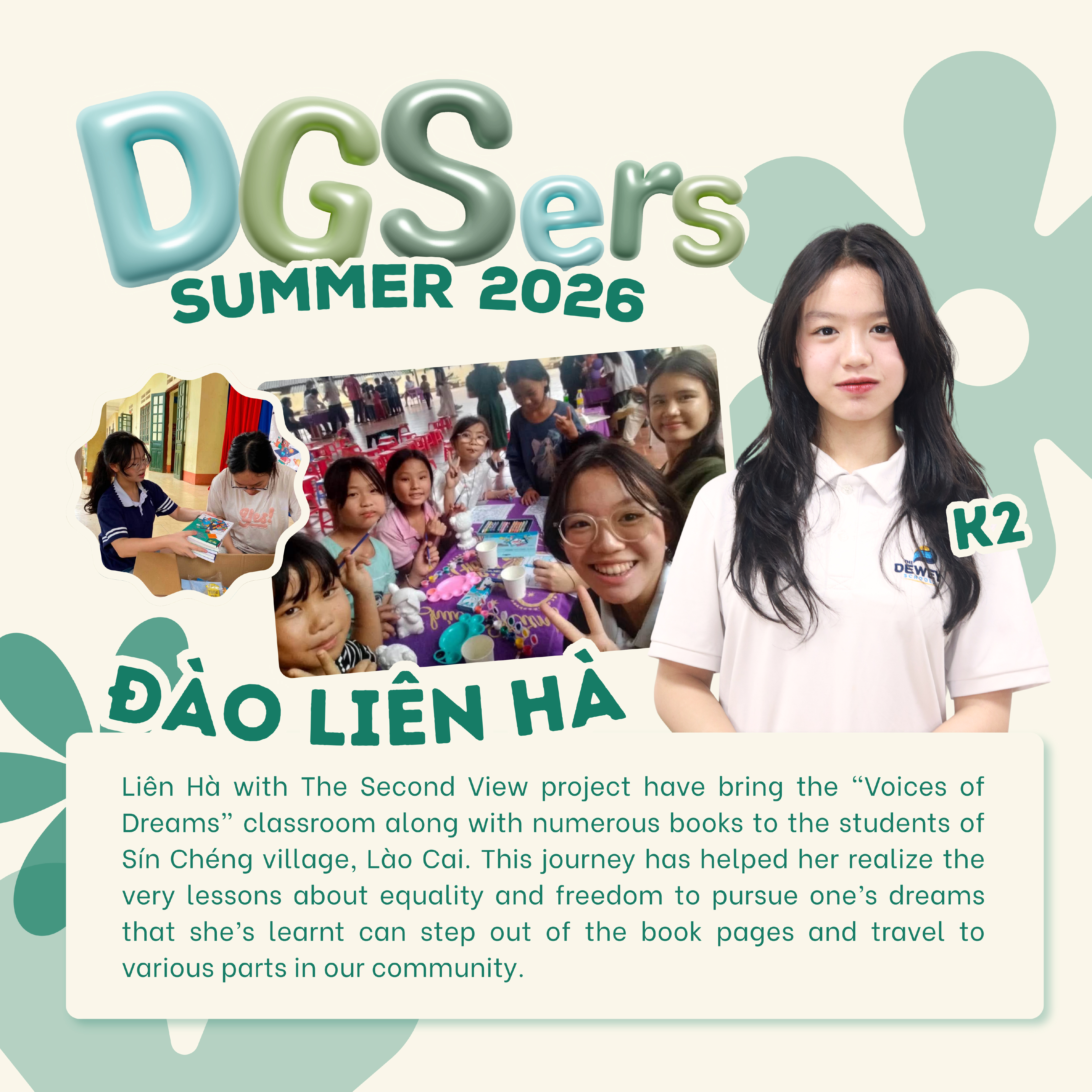
"This summer, Liên Hà and the members of The Second View visited Primary School No. 2 in Sín Chéng, Lào Cai, where they organised the “Voices of Dreams” workshop, built a bookshelf, donated books and school supplies, and shared the story of scientist Marie Curie. Through this experience, Liên Hà realised that lessons about gender equality, women’s rights, and the freedom to pursue one’s dreams should not remain confined to the pages of books. Inspired by literature, each of us can carry these values forward and share them with our communities."
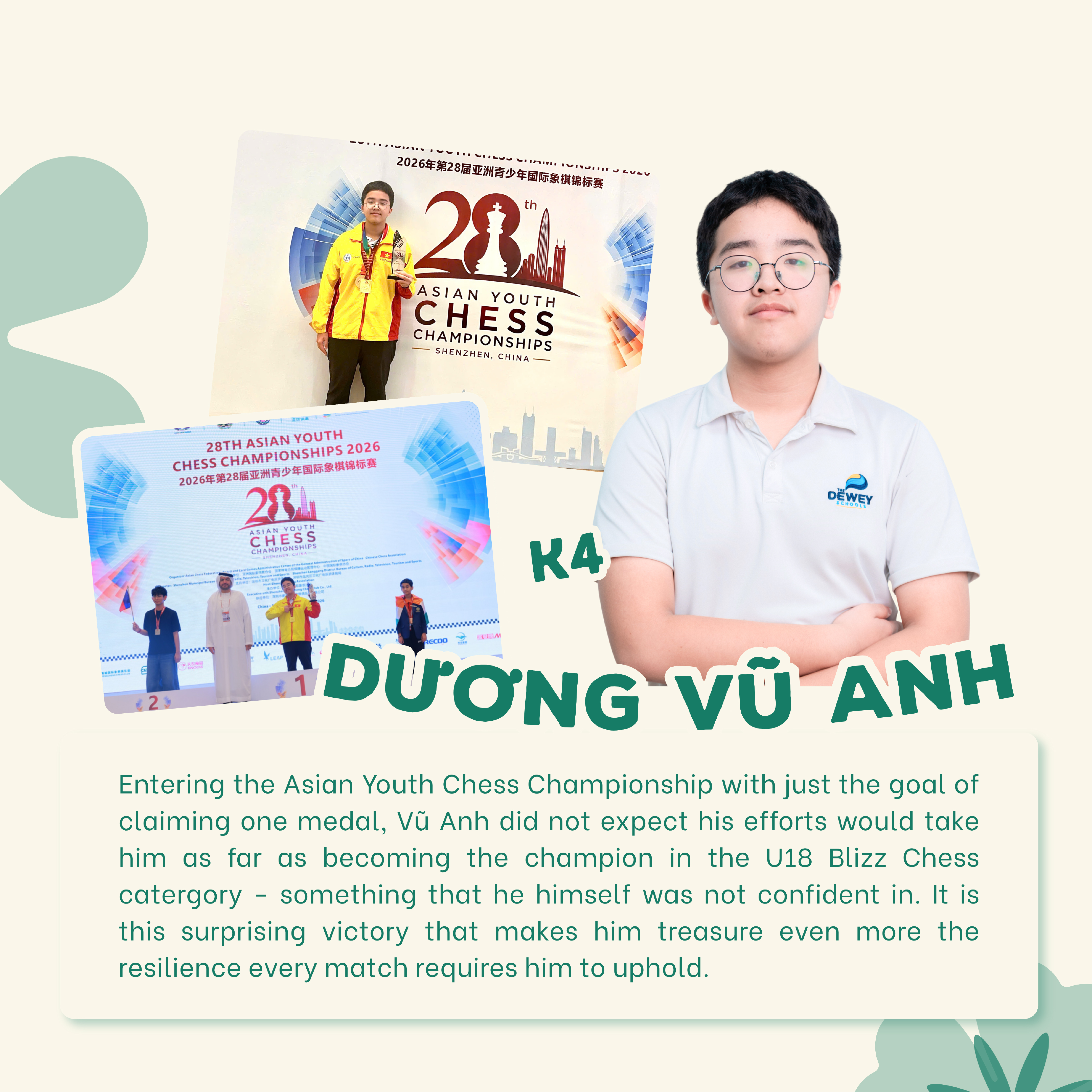
"My most memorable experience was the 28th Asian Youth Chess Championship. Before the tournament, my goal was simply to win a medal, as the competition brought together many talented young chess players from different countries. Therefore, when I exceeded my expectations in Blitz Chess, a category that I’m not particularly confident in, and won the U18 Asian Championship, I was both incredibly happy and a little surprised that I had actually done it. This event has also helped me realize the value of enjoying every game and cherishing the time I had to pursue my passion, rather than focusing solely on achievements."
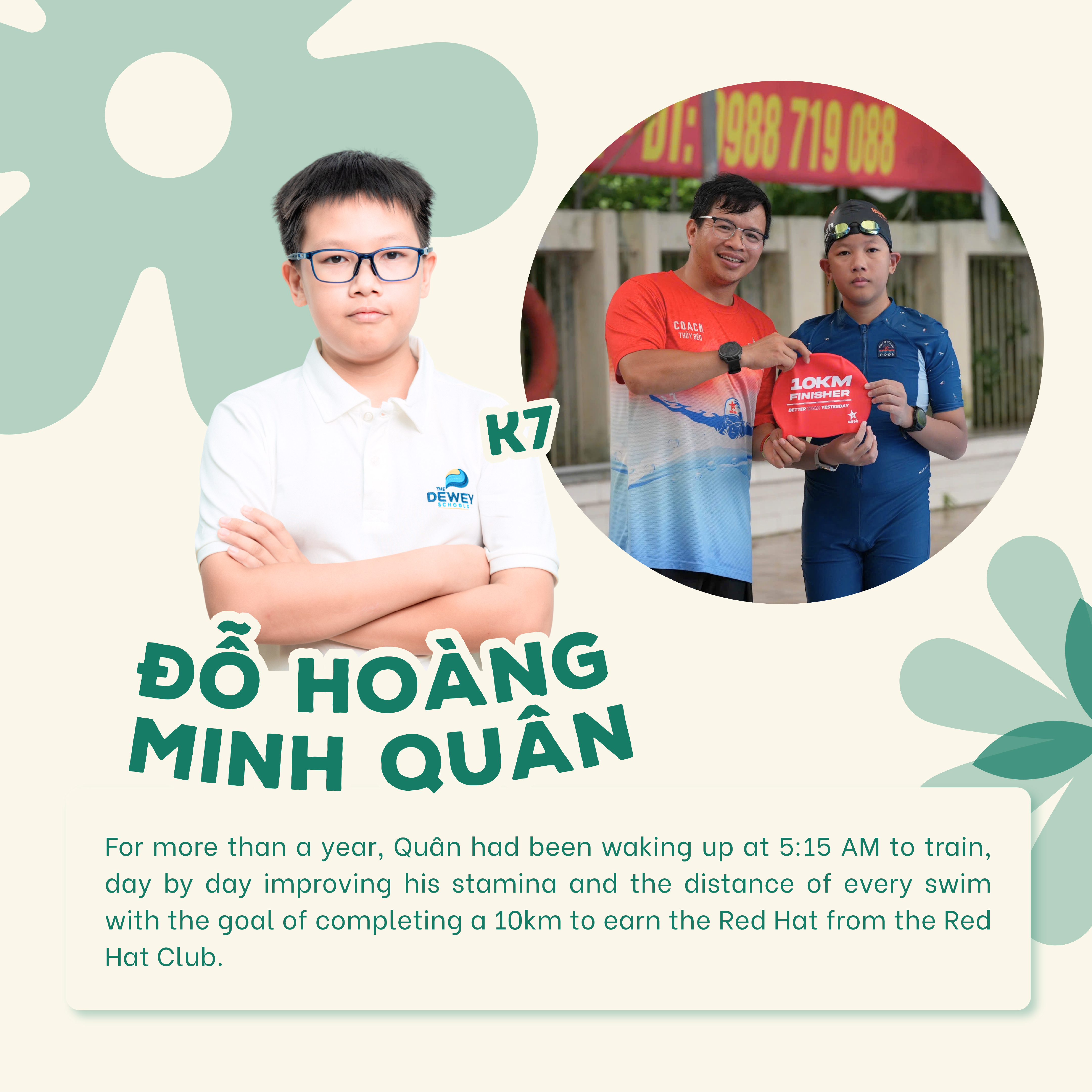
"There are some goals where we immediately know we can achieve the moment we set them. But there are also goals where we don’t know whether we have what it takes to see them through. For me, the most memorable challenge of this past summer belonged to the latter. It was a goal I had been thinking about for more than a year, spending countless mornings preparing for it, and there were times when I myself wondered whether I would be able to finish. That goal was to swim 10 km continuously to earn the Red Hat from the Red Hat Club.Ten kilometres in the water is a very long distance, especially for a 12-year-old like me. So I understood that I could not rely solely on determination on the day of the challenge. For more than a year, I trained and gradually increased the distance I could swim. By the time summer arrived, I decided to turn my goal into a concrete plan. I accumulated swimming distance, worked on improving my endurance, and prepared my body for the day I would attempt 10 km. On summer mornings, I would wake up at 5:15 a.m., get my things ready, and run around Thanh Xuân Lake before heading to the swimming pool. I did not want to get out of bed that early every morning, but I gradually understood that a goal would remain just a goal if I did not do something every day to move closer to it.
Then, on a summer morning near the end of the break, the day I had been waiting for finally arrived. The first 6 km went better than I had expected. I swam continuously, my body still felt strong, and I was full of excitement. The next 2 km became more difficult, but I was still able to keep up with the older members of the club. By then, I had completed 8 km and had only 2 km left. Two kilometres may not sound like much compared to the distance I had already covered, but they turned out to be the hardest two kilometres of all.
It was during those final 2 km that I truly understood what it felt like to reach my physical limit. My arms began to ache, my legs grew heavier, and my pace kept slowing down. My time per 100 m dropped from around 3 minutes 5 seconds to 3 minutes 18 seconds, then 3 minutes 30 seconds, and at times even 3 minutes 40 seconds. Eventually, I no longer had enough strength to continue swimming freestyle and had to switch to breaststroke. At that point, I stopped thinking about how fast I needed to swim or what my time would be. I only thought about how I had trained for more than a year to get here, had already completed 8 km, and had only one final stretch left. If I stopped, I would never know how far I could have gone.
So I kept swimming. I did not need to be fast anymore; I just needed to keep going. I broke the remaining 2 km into smaller distances and told myself to complete one lap, then another 100 m at a time. The more tired my body became, the closer the finish line felt. Finally, I touched the wall and completed the full 10 km. At that moment, I was completely exhausted but incredibly happy. The Red Hat I received was not simply a reward for swimming 10 km. To me, it was a testament to more than a year of training, all those mornings waking up at 5:15 a.m., and especially those final kilometres, when my body wanted to stop but I chose to keep going."
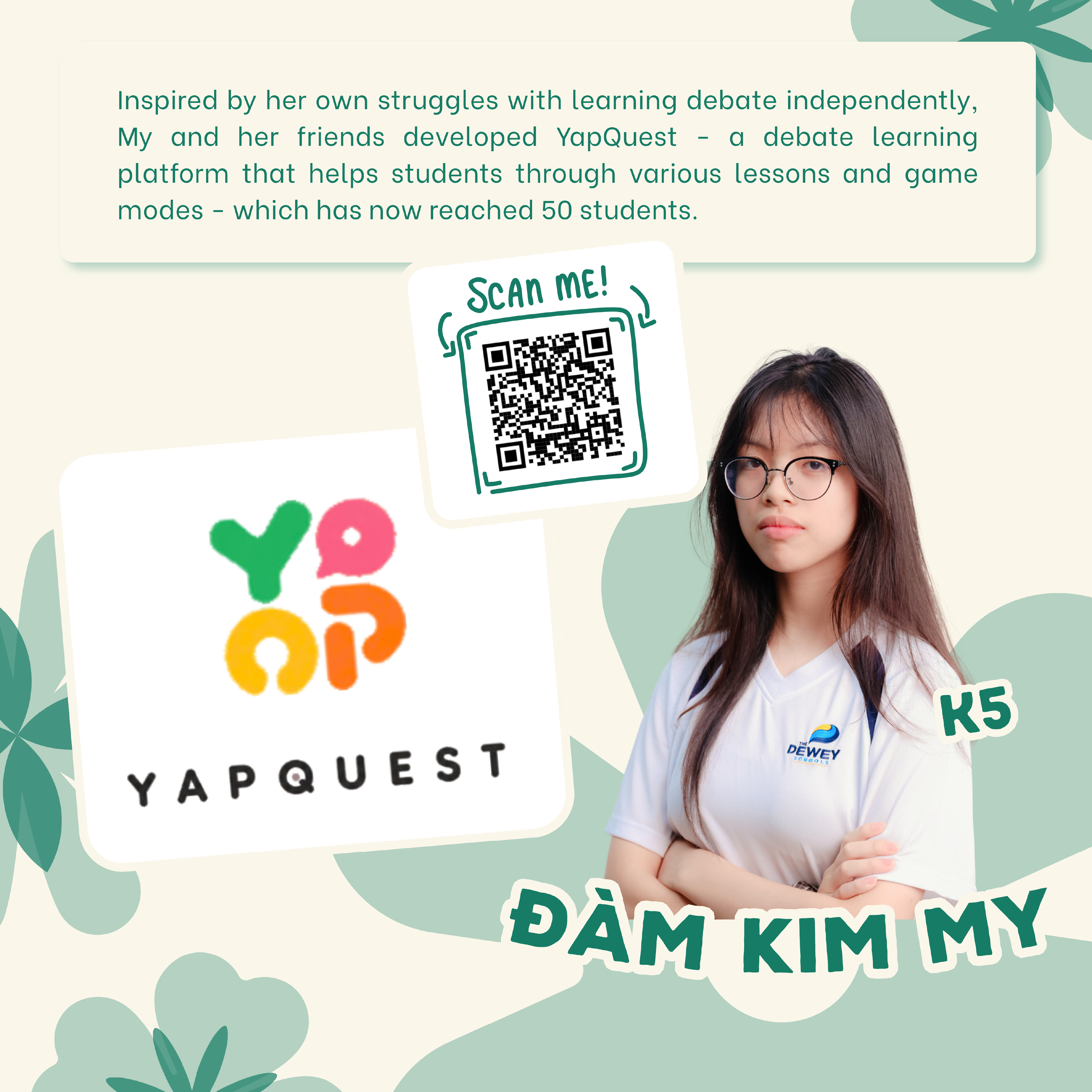
"During the past summer break, I spent a lot of time on debate, particularly exploring ways to make learning debate more accessible for students who are just getting started. Along the way, my team and I developed YapQuest, an online platform that helps students learn and practice debate through improving each independent skill.
My own experience with debate made me realize how difficult self-learning could be. There were many times when I felt lost, unsure of what I needed to improve or how to improve it. That is why, for me, the most memorable part was not simply building a website, but asking ourselves: “If a student who has never learned debate opens a debate motion for the first time, where would they even begin?” If beginners could have a clear learning path from the moment they knew nothing about debate, the process would become so much easier.
Starting from this question, we created lessons, exercises, and challenges that allow students to learn step by step and understand what they need to improve. Most importantly, we wanted learning debate to feel genuinely exciting and engaging, with the goal of encouraging students to come back and learn every day—even if it is just for 15 minutes. That is why we designed a leaderboard and created different game modes, turning the learning experience into something that feels more like a game.
So far, around 50 students have used YapQuest, and we are also preparing to launch a debate club at Dewey Schools Cầu Giấy. I am really happy because from being the challenge I once experienced myself, this journey has created something that can help other students get started more easily - and that students of any level can take part."
These summer stories are just a few small snapshots among the many journeys DGSers have taken. As they return to school, they bring back more than experiences to share. They bring new discoveries about the world, about others, and about themselves.
A classroom is not only a place with desks, chairs, a board, or a bell. It can be anywhere a student is curious enough to explore, persistent enough to challenge themselves, and thoughtful enough to turn what they learn into something meaningful for the people around them.

